Sanders and AOC Introduce Federal Data Center Moratorium. The Cooling Supply Chain Should Be Paying Attention.
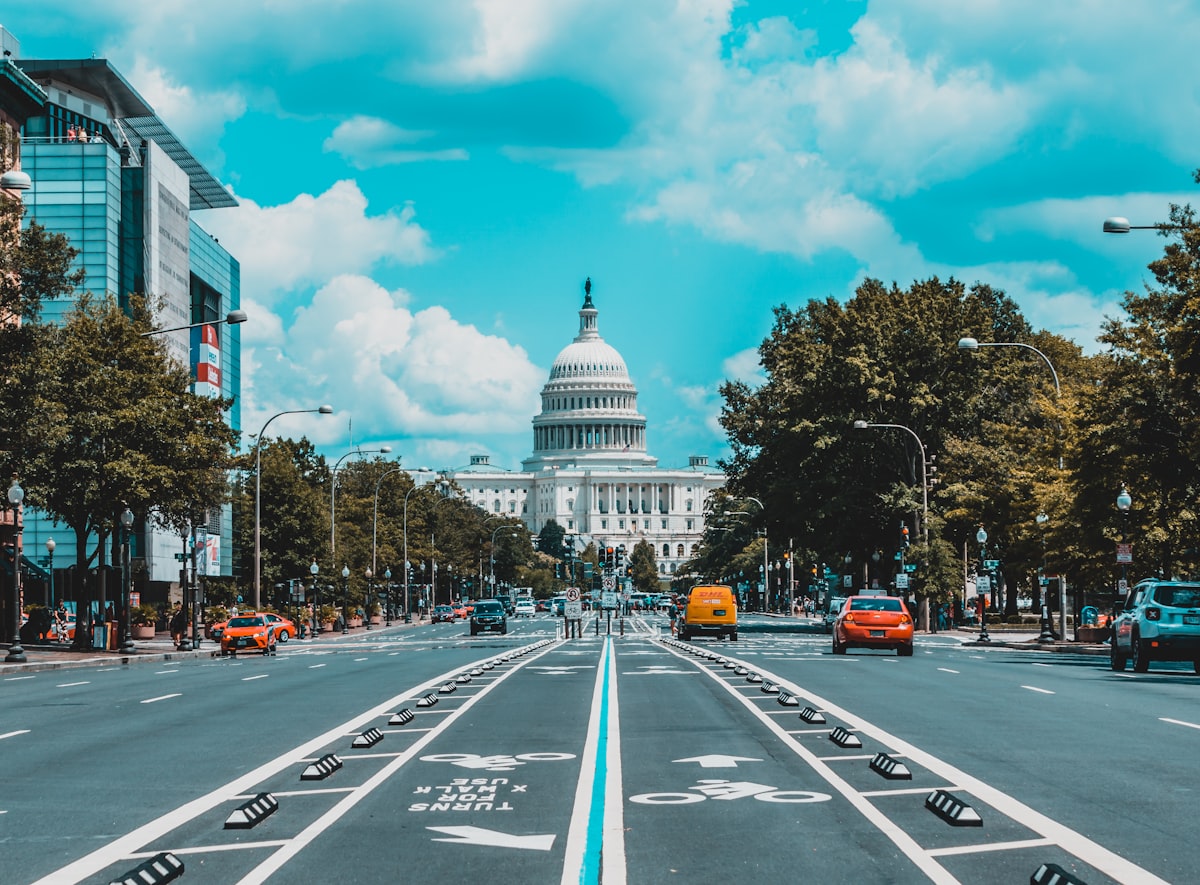
The bill will almost certainly die. That is not the point.
On March 25, 2026, Senator Bernie Sanders (I-VT) and Representative Alexandria Ocasio-Cortez (D-NY) introduced the AI Data Center Moratorium Act, a bill that would place a federal freeze on all new AI data center construction in the United States. No new permits. No new groundbreakings. Full stop, until Congress passes AI safety laws, worker protection laws, and community and energy protection frameworks. The bill also includes an export ban on AI computing infrastructure to any country that lacks equivalent safeguards.
Sanders framed it plainly: "We cannot sit back and allow a handful of billionaire Big Tech oligarchs to make decisions that will reshape our economy." AOC called it a moral obligation. Senator John Fetterman, a Democrat, opposed it outright, calling the measure "China First."
The political math is straightforward. This bill has almost no path through the current Senate. The current political climate is not aligned with construction freezes on infrastructure that both parties have, at various moments, called critical to American competitiveness. The bill will not become law this session.
But that framing misses the mechanism by which legislation like this actually damages industries. The damage is not in passage. The damage is in the uncertainty it produces in the months between introduction and death.
What a Freeze Would Actually Mean for Cooling Infrastructure
Consider the order book of a cooling distribution unit manufacturer. CDUs, cold plates, rear-door heat exchangers, dry coolers, chillers. None of these products get ordered in response to a completed data center. They get ordered 18 to 24 months before a facility goes live, tied directly to committed construction permits and site prep timelines. The cooling supply chain runs on forward visibility. Always has.
A federal moratorium, even a temporary one with conditions attached, would halt that pipeline at the source. Not because facilities under construction would stop. Permitted projects in progress would likely receive exemptions or grandfather treatment. The freeze point is everything that has not yet broken ground, everything sitting in the queue waiting on final permitting, site acquisition, or utility interconnection agreements.
That queue is enormous. Between May 2024 and June 2025, 36 data center projects were blocked or delayed at the local and state level, disrupting more than $162 billion in planned investment. That figure predates the federal bill. Local resistance to data center development has been accelerating: more than 100 communities and 12 states have enacted or proposed their own moratoriums in the same period. The Sanders-AOC bill is federal codification of a movement that is already happening piecemeal across the country.
The Procurement Signal Problem
Here is where the practical damage lives. A hyperscaler's construction team does not need a moratorium to actually pass in order to slow down a procurement decision. They need a reason to hesitate. "There is active federal legislation seeking to freeze new construction" is a reason to hesitate. Legal teams get involved. Government affairs teams get involved. Capital allocation reviews get extended. The 18-month cooling procurement window that manufacturers depend on compresses toward 9 or 10 months, and then the expedite premiums start hitting margins.
CDU lead times from major manufacturers are already running 16 to 22 weeks under normal demand conditions. Cold plate manifold assemblies, custom to specific GPU tray configurations, can run longer. If procurement teams defer decisions by even one quarter while their legal departments assess exposure, the downstream effect on cooling vendors is not theoretical. It is a gap in the production schedule.
The public opinion dimension matters too. An NBC News poll found that 57% of registered U.S. voters believe AI risks outweigh benefits. That number is not going to accelerate data center permitting approvals at the county level. Local planning commissions read polling data. So do state legislators looking for issues to run on in 2026 midterm cycles.
Three Conditions. None of Them Fast.
The bill specifies three conditions that must be met before construction can resume: passage of AI safety laws, worker protection laws, and community and energy protection frameworks. Evaluate each of those against the current legislative calendar.
Comprehensive AI safety legislation has been stalled in Congress for two years. Worker protection frameworks tied to automation displacement have no serious bipartisan traction. Community and energy protection laws that would satisfy the bill's sponsors do not currently exist in any draft form that has cleared committee in either chamber. In theory, the bill could be satisfied. In practice, its conditions are structured to be satisfied slowly, if at all.
The export ban provision adds another dimension. Banning AI computing infrastructure exports to countries without equivalent safeguards would, in practice, cover most of the world. That is a trade policy intervention with consequences far beyond data center construction timelines. It would affect hyperscaler expansion strategies in Southeast Asia, the Middle East, and Latin America, all of which are active liquid cooling deployment markets right now.
What the Cooling Industry Should Actually Do
Dismiss this as political theater at your own risk. The legislative risk is low. The permitting risk is not.
The bill's introduction gives cover to every local official, state regulator, and utility interconnection manager who wants to slow-walk a data center approval. It normalizes the idea of a pause. That normalization is the real product of this legislation, regardless of whether the bill ever comes to a floor vote.
Cooling vendors and thermal engineers who depend on hyperscaler construction pipelines should be mapping their top 20 projects against current permitting status. Projects that have broken ground are protected. Projects in the permitting queue are exposed. The difference between those two categories is where the supply chain risk is concentrated, and that is where procurement teams should be having hard conversations now, before the political noise gets louder.
The bill will probably die. But it leaves a mark on the permitting environment. That mark has a cost.