Where Cooling Components Come From and Why They're Late: The 2026 Data Center Cooling Supply Chain Guide
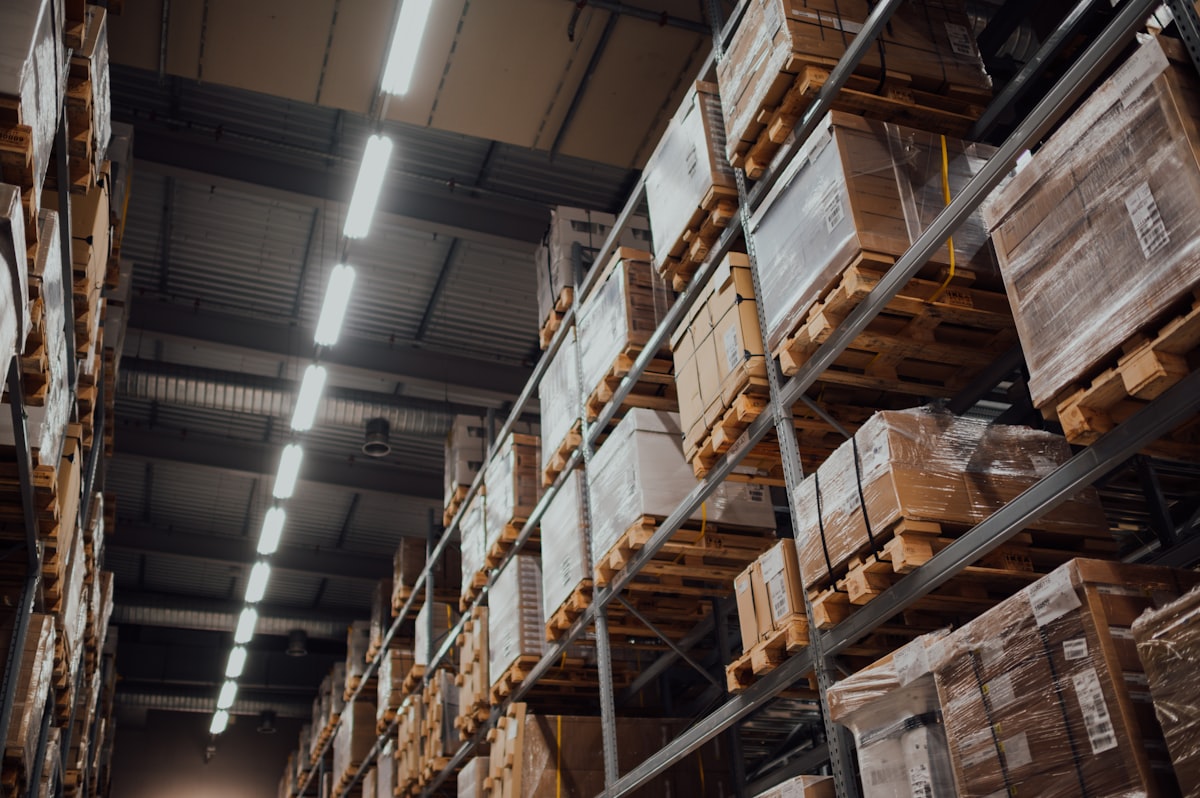
The data center cooling industry likes to talk about itself as a technology sector. It is not. At its core, it is a manufacturing supply chain. Copper tube mills. Aluminum fin coil lines. Specialty pump foundries. Chemical blending plants for refrigerants. CNC shops machining cold plates to micron tolerances. Before a single watt of AI compute gets cooled, a dozen industrial processes have to complete, ship, clear customs, and arrive on time at a facility that may not yet have a finalized rack layout.
That matters because manufacturing supply chains are currently under severe stress. In January 2026, RELEX Solutions surveyed more than 500 supply chain leaders across the United States, Germany, the United Kingdom, France, Australia, and New Zealand. Eighty-nine percent reported material impact from tariffs and trade policy changes. Fifty-seven percent identified raw materials and components as their most disrupted supply chain area. These are not abstract numbers. They describe the exact inputs that cooling vendors are trying to source right now, at 2-to-3x historical volumes, against a buildout that will not slow down for them.
This guide maps the cooling supply chain from raw material to commissioned rack. Where components come from. Which trade lanes are under tariff pressure. Why lead times look the way they do. What the M&A consolidation wave actually buys. And what operators who cannot afford a commissioning delay should be doing differently.
Read it alongside our complete guide to how data center cooling systems work for the full technical and commercial picture.
The Bill of Materials Nobody Publishes
A cooling distribution unit does not arrive from a single factory. It is an assembly. Every subcomponent has its own supply chain, its own lead time, and its own tariff exposure. Understanding where cooling systems are slow means understanding what they are made of.
Start with copper. Copper tubing and copper cold plates form the thermal backbone of liquid cooling. Cold plates are machined from copper billet or formed from copper sheet, with microchannel geometries cut to maximize surface area against the chip package. Every CDU heat exchanger uses copper tubes brazed into headers. Copper spot prices track global mining output, Chinese smelter capacity, and speculative trading in equal measure. When copper moves, cold plate costs move with it. The metal itself is priced on the London Metal Exchange; fabricated copper tubing adds roughly 30 to 50 percent on top of raw material cost to cover drawing, annealing, and quality certification. The fabrication margin does not compress when LME copper spikes.
Aluminum fin stock is the primary material for dry coolers and heat rejection equipment. An air-cooled heat exchanger for a large CDU installation might contain hundreds of square meters of aluminum fin surface, brazed between aluminum tubes in a controlled-atmosphere furnace. Fin stock gauge tolerances are tight. Not every aluminum rolling mill qualifies. Supply of aerospace-grade and HVAC-grade aluminum fin stock runs through a handful of mills globally, concentrated in Germany, the United States, and China.
Stainless steel manifolds and pressure vessels carry the facility-side coolant loop. These are pressure-rated, often ASME-certified, and manufactured to specific dimensional tolerances that vary by customer. Lead times on custom stainless manifolds routinely run eight to twelve weeks even in a normal market. They are not catalog items you order and receive in days.
Specialty pumps and variable frequency drives (VFDs) sit at the intersection of the cooling and electrical supply chains. The pump moves coolant; the VFD modulates pump speed to match load. Both are industrial components with their own lead times. Pump manufacturers like Grundfos and Xylem serve multiple industries simultaneously. When semiconductor fab construction, pharmaceutical manufacturing, and data center buildout all accelerate at the same time, pump lead times lengthen across all of them. VFDs, heavily dependent on power semiconductors, carried 20 to 40 week lead times at the peak of the 2021-2022 chip shortage. That vulnerability has not been structurally resolved.
Refrigerant chemicals add another layer. CDUs and chillers using direct refrigerant cycles run R1234ze(E), a low-GWP hydrofluoroolefin manufactured primarily by Honeywell and Chemours. Water-glycol systems require propylene or ethylene glycol inhibitor packages, with specific biocide and corrosion inhibitor formulations qualified by each CDU vendor. The chemical supply chain is less frequently discussed in cooling circles and more frequently the thing that holds up commissioning. Specifying the wrong glycol concentration or getting a batch with out-of-spec pH arrives at the worst possible moment.
Brazing alloys, gaskets, elastomeric seals, and pressure-rated fittings complete the picture. None of these are high-cost relative to the full system. All of them can stop production if a single batch fails qualification or a supplier misses a ship date.
The supply chain for a $150,000 CDU runs through perhaps fifteen different tier-one suppliers and twice as many tier-two and tier-three vendors. Most operators know the name on the CDU. Almost none have mapped the supply chain underneath it.
89% Report Tariff Impact. Here Is Where It Hits Cooling.
The RELEX finding that 89% of manufacturers report material impact from tariffs and trade policy is, for the cooling industry, nearly a precise description of its current geography problem.
Consider where the equipment ships from. CoolIT Systems, now owned by Ecolab following the $4.75 billion acquisition that closed in March 2026, manufactures CDUs in Calgary, Canada. Canada sits under a 25 percent tariff on most goods entering the United States under the current trade framework. A CoolIT CDU crossing into the US is now a tariffed import. That is not a hypothetical trade exposure. It is live, today, on every purchase order placed by a US hyperscaler.
Munters, whose evaporative cooling and adiabatic systems are deployed in large-scale AI clusters, manufactures in Sweden and ships globally. European manufactured goods entering the United States currently carry a 20 percent blanket tariff. Munters opened a manufacturing facility in Virginia specifically to serve the North American market, a direct response to this exposure, but the Virginia factory serves incremental demand. The Sweden line still ships to customers whose projects started before the Virginia capacity came online.
Panasonic acquired Italian thermal management company Tecnair specifically to establish European manufacturing for the CDU market. Italian-origin goods entering the US face the same 20 percent European tariff. For Panasonic's European customers, the Tecnair acquisition is clean. For any North American projects those units end up serving, the math changes.
Chinese vendors present a different tier of exposure. Envicool and Aotecar have become serious competitors in the CDU market, with Google qualifying Envicool units for deployment at scale. China-origin cooling equipment entering the United States now faces tariffs in the 145 percent range under current policy. That effectively closes the US market for Chinese CDU vendors selling directly. It does not close their ability to supply European, Asian, or Middle Eastern operators, and it does not eliminate their influence on global pricing benchmarks.
The RELEX data found that 57% of manufacturers cite raw materials and components as their most disrupted supply chain area. For cooling, this maps directly to copper and aluminum. LME copper has traded above $9,000 per metric ton through most of 2025 and into 2026. Aluminum has been volatile against a backdrop of energy cost pressure in European smelting. Both materials sit inside every cooling system built. Neither can be substituted away.
The cost pressure compounds. Ecolab announced a 10 to 14 percent global energy surcharge effective April 1, 2026, applied across its cooling services portfolio. That surcharge flows through to every facility paying for Ecolab-managed cooling chemistry and maintenance contracts. It is not a tariff, technically. The economic effect on operators is the same. The RELEX report found that 46% of manufacturers raised consumer prices to offset supply chain cost increases, with that figure rising to 59% specifically among manufacturers. Cooling vendors are manufacturers. The price pass-through is real and it is accelerating.
The Demand Volatility Problem Is Worse in Cooling
The RELEX survey found that 40% of manufacturers are experiencing demand fluctuations, including unpredictable orders, cancellations, and bullwhip effects. In most manufacturing sectors, demand volatility means quarterly swings of 10 to 20 percent. In cooling, the volatility takes a different shape.
Total demand is surging. Not 10 or 20 percent. The liquid cooling market was roughly $3 billion in 2025 and is projected to reach $7 billion by 2029 according to Dell'Oro Group. The broader thermal management market sits at $10.8 billion in 2025 and is tracking toward $25.1 billion by 2031 per Mordor Intelligence. The buildout is real. Top-14 hyperscale and cloud operators have committed $750 billion in data center capital expenditure for 2026 alone, per BNEF. Twenty-three gigawatts of new capacity is under active construction globally, with 75 percent of that in the United States.
But individual projects keep slipping. Permitting delays push commissioning dates by six to eighteen months. Power availability constraints pause construction at facilities that already have CDUs on order. State-level moratorium legislation in Wisconsin and Ohio, combined with federal noise from the Sanders-AOC Data Center Moratorium Act, creates planning uncertainty that operators cannot fully ignore, even when the odds of passage are low. The result is a CDU vendor whose macro demand signal is "build everything as fast as possible" and whose micro order book is a rotating calendar of pushed dates and revised specs.
That is the bullwhip effect in its cooling-specific form. Hyperscalers place large orders to secure capacity. Projects slip. Delivery gets deferred. The vendor's production schedule is full, but actual shipments are lumpy and unpredictable. Meanwhile, a second hyperscaler needs CDUs six weeks earlier than planned because their construction schedule ran ahead of projections. The vendor cannot satisfy both simultaneously.
CDU manufacturers cannot plan production runs around a customer base that does not share roadmaps. Hyperscalers treat facility construction timelines as competitive information. A CDU vendor who knows exactly what Google is building and when could infer GPU procurement volumes, which data center locations are prioritizing AI versus search, and how aggressive the timeline is for next-generation rack density. Google does not share that. Neither does Microsoft, Amazon, or Meta. The vendor is expected to have product ready on short notice, without the information needed to optimize production in advance.
The supply chain was built for a market of 5 to 8 gigawatts per year. The market is now demanding 17-plus gigawatts. That gap does not close with faster shipping. It requires additional manufacturing capacity that takes 18 to 36 months to bring online.
Safety Stock Is Declining While Demand Is Spiking
This is where the math breaks.
The RELEX report found that only 28% of manufacturers are increasing safety stock in 2026, down from 43% in 2025. That is a 15-point decline in buffer inventory building, in a single year, at the exact moment demand across the cooling industry is accelerating. The decline reflects capital constraints. Carrying inventory costs money. At high interest rates, the carrying cost of stocking six months of copper tubing or an extra batch of VFDs is material. Finance teams push back. Safety stock gets cut.
Apply that to CDU manufacturing. A CDU vendor carrying buffer inventory of copper cold plates, heat exchangers, and pump assemblies can respond to a customer who needs expedited delivery. A vendor who has trimmed safety stock to preserve working capital cannot. At 16 to 24 week standard lead times for CDUs, a vendor with no buffer is telling operators to wait six months from purchase order to ship. In a $750 billion buildout, six months of cooling delay on a 100 MW campus is not an inconvenience. It is a commissioning failure with hundreds of millions in downstream consequences.
The chiller side is worse. Chiller lead times run 20 to 30 weeks under normal conditions. A facility using mechanical cooling as backup or as the primary rejection loop for indirect liquid cooling systems needs chillers on site before commissioning. If the chillers are 30 weeks out from order and the construction schedule compresses by six weeks, there is no buffer. The facility opens late or opens hot.
The 28% who are still building safety stock in 2026 deserve attention. These are the vendors who understand that a 16 to 24 week lead time with zero buffer inventory is functionally a 16 to 24 week customer response time, with no ability to flex. In cooling, that vendor will lose business to any competitor who can ship in ten weeks because they built buffer during a slower quarter. The math on carrying cost versus lost revenue heavily favors the buffer when your customer base is hyperscale operators with billion-dollar commissioning schedules at stake.
Partnership Over Redundancy: The M&A Wave Explained
The RELEX report shows a sharp divergence in how manufacturers are responding to supply chain pressure. Fifty-nine percent are strengthening collaboration with logistics and supply chain partners, up from 52% in 2025. Meanwhile, only 37% are expanding their supplier base, down sharply from 50% in 2025. The industry is concentrating relationships, not diversifying them.
That is exactly the pattern the cooling M&A wave describes.
Each of these deals is a supply chain decision as much as a product decision. When Ecolab paid $4.75 billion for CoolIT, it was not primarily buying CDU technology. It was buying guaranteed CDU production capacity, a qualified manufacturing line in Calgary, and a direct relationship with every hyperscale procurement team that had already qualified CoolIT hardware. Ecolab's existing chemical and water treatment business already sits inside every major data center cooling loop. The CoolIT acquisition closes the loop: chemistry, hardware, and service contracts under a single vendor relationship.
Eaton's $9.5 billion acquisition of Boyd Thermal follows the same logic. Boyd manufactures thermal interface materials, cold plates, and heat spreaders at precision tolerances. Eaton brings power distribution infrastructure. Together they can offer an integrated thermal and power solution to a hyperscale customer who does not want to manage five separate vendor relationships at each rack position. One throat to choke. One contract to negotiate. One lead time to track.
Trane's acquisition of LiquidStack adds two-phase immersion cooling to a company that already makes chillers and heat rejection equipment. Vertiv adding ThermoKey gives them European heat rejection manufacturing to complement their CDU and power portfolio. Schneider's stake in Motivair fills their liquid cooling gap without starting from scratch.
The 13-point decline in supplier base expansion (50% in 2025 to 37% in 2026) is the other side of this coin. The industry is consolidating around large, integrated vendors rather than assembling systems from best-of-breed specialists. For operators, that means fewer sourcing options over time and more dependence on the performance of a smaller number of large platforms. The supply chain is trading resilience for simplicity. Whether that trade holds up under the next disruption is an open question.
See the full picture in our earlier analysis of the liquid cooling supply chain frontrunners and the hundred chasers.
AI in the Cooling Supply Chain
The RELEX survey found that 67% of supply chain leaders report increased confidence in AI for supply chain decisions, and 71% plan to invest in generative AI for supply chain over the next three to five years. Forty-seven percent are already using AI for inventory and supply optimization. Thirty-one percent are using generative AI specifically for supply chain planning.
This is real, but the framing matters. Madhav Durbha, Group VP of Manufacturing Industry Strategy at RELEX, described AI as "becoming part of everyday supply chain decision-making." That is an accurate description of where the industry is heading. It is not an accurate description of where most cooling vendors are today.
Running AI-based demand forecasting for a cooling vendor looks different from running it for a consumer goods manufacturer. A CPG company might have thousands of retail accounts generating daily point-of-sale data. A CDU vendor might have twelve active accounts, all hyperscalers, none of whom share production roadmaps. The training data for a demand forecasting model built on historical purchase orders is thin and lumpy. A single large order from one hyperscaler can look like a demand spike that the model interprets as a trend. It is not a trend. It is one project.
The 54% hybrid approach (AI recommends, humans decide) maps precisely to how procurement actually works in this sector. An experienced cooling industry procurement manager at a company like Vertiv or Modine knows things about their customer base that no model can infer from order history: which hyperscalers are in a planning phase versus an execution phase, which programs are constrained by GPU availability versus site readiness, which announced projects are real and which are press release noise. The model can flag anomalies, optimize reorder points, and surface lead time risk across a multi-tier BOM. The human decides what to do about it.
The 15% who say they have no plans to use AI in supply chain deserve some scrutiny. In cooling, these are likely smaller regional vendors who manage their supply chains through direct relationships and personal knowledge of their supplier base. That approach works until scale exceeds what personal relationships can cover. At 2-to-3x historical order volumes, the informal mental model breaks. Those vendors are carrying the most risk from the current demand surge.
Where AI adds genuine value in the cooling supply chain is at the tier-two and tier-three level. Mapping which copper fabricators supply which CDU manufacturers, tracking which pump foundries have capacity constraints, monitoring commodity pricing for copper and aluminum against reorder triggers: these are use cases where machine speed matters and where the data, once assembled, is clean enough to generate reliable signals. The vendors investing here now will have a structural advantage when the next disruption arrives.
The Regulatory Compound Effect
The RELEX report found that 34% of manufacturers cite regulations and compliance as a significant supply chain disruptor. For the cooling industry, this number understates the actual exposure because the regulatory surface area is unusually large and unusually active simultaneously.
Start with refrigerants. The EU F-gas regulation, revised in 2024, phases down high-GWP refrigerants on an accelerated schedule. R134a, which still appears in legacy chiller designs, is being phased out of new equipment across Europe. R410A is being phased out by 2025 under EU rules. The replacement, R1234ze(E), is manufactured by two companies: Honeywell's Solstice line and Chemours' Opteon series. A chiller or CDU manufacturer transitioning their product line to R1234ze(E) is now dependent on two suppliers for a critical process input. Both suppliers have other customers. Both are capacity-constrained as the transition accelerates across the entire HVAC and refrigeration industry simultaneously. The refrigerant transition is not a future problem. It is a current production constraint affecting every chiller vendor shipping into Europe and every vendor planning US products against the likelihood of federal GWP restrictions.
PFAS restrictions add a separate compliance layer for immersion cooling vendors. Per- and polyfluoroalkyl substances are the active compounds in most two-phase immersion fluids. The EU REACH restriction on PFAS, which moved toward broad restriction in 2023 and is advancing toward enforcement, affects 3M's Novec line and similar fluids. 3M exited the PFAS business entirely. The resulting supply disruption for two-phase immersion cooling vendors is still working through the market. Operators who specified 3M Novec in their immersion tank designs are now requalifying fluids or switching vendors. Requalification takes months.
Water permitting adds a third vector. Operators in Texas, Arizona, and the American Southwest face increasing scrutiny over cooling water withdrawal, with some municipalities requiring demonstrated water efficiency plans before issuing permits. The water consumption surge driven by evaporative cooling at AI-scale facilities has made this a genuine political issue in drought-stressed regions. Operators choosing liquid cooling over air cooling partly for water efficiency reasons are adding a supply chain requirement (CDUs, cold plates, pumps, manifolds) to avoid a permitting requirement (water withdrawal). Both sides of that trade have lead times.
Federal energy reporting requirements are coming. The Hawley-Warren data center energy reporting mandate, introduced in the Senate, would require large facilities to disclose energy consumption and cooling efficiency metrics. Even at the proposal stage, this creates compliance planning work. Facilities without automated monitoring infrastructure will need to add it, which means additional hardware procurement.
Pennsylvania H.B. 1834 and similar state-level bills proposing data center construction moratoria or environmental review requirements add permitting uncertainty to site timelines. A cooling vendor who has a CDU order on the books for a Pennsylvania facility under construction has no reliable way to know whether that project's completion date is solid or vulnerable to a state regulatory action.
Each regulation in isolation is manageable. The compound effect, all of them active simultaneously, on a supply chain already under tariff, demand, and capacity pressure, creates a compliance overhead that smaller vendors genuinely struggle to absorb. The consolidation wave described in the M&A section is partly a response to this: large platforms have compliance teams. Startups do not.
What Operators Should Do Now
This is not a list of vague recommendations. These are specific actions with specific timelines, based on the supply chain realities described above. Operators who take them seriously in Q2 2026 will have more options in Q4 2027. Operators who wait will not.
Lock in CDU and cold plate orders at least 24 months ahead. Standard lead times are 16 to 24 weeks for CDUs and 12 to 16 weeks for cold plates under normal production conditions. "Normal" is a generous description of the current market. Vendors are running at or above capacity. Orders placed today are entering production queues that vendors are managing against multiple large customers simultaneously. A 24-month forward order is not overcautious. It is the minimum required to ensure product availability for facilities beginning construction in 2027 or 2028.
Dual-source heat rejection equipment. Dry coolers and cooling towers from a single vendor is a single point of failure with 20 to 30 week lead times. European vendors like Munters face tariff exposure on US deliveries. Domestic alternatives exist but have their own capacity constraints. Qualifying two vendors for heat rejection during the design phase costs engineering time. It eliminates the scenario where your commissioning date slips six months because your single-source chiller vendor pushed your delivery to accommodate a larger order.
Audit your vendor's vendor. The tier-two supply chain is where the actual risk lives. Ask your CDU vendor which copper fabricators they use, where their cold plate machining is sourced, and which pump manufacturers supply their pump assemblies. If they cannot answer, that is information. Vendors with opaque tier-two supply chains are carrying risks they cannot see. Vendors who have done the mapping know where their vulnerabilities are and can tell you about them. Prefer the latter.
Budget for 10 to 15 percent cost increases on cooling hardware through 2027. The combination of copper and aluminum commodity pressure, tariff pass-throughs, energy surcharges (Ecolab's 10 to 14 percent surcharge effective April 1 is the leading example, not an isolated event), and demand-driven pricing in a constrained market adds up. Any project financial model that uses 2024 cooling hardware pricing for 2027 commissioning is carrying an unacknowledged budget risk. Re-mark your assumptions now.
Specify refrigerants with GWP below 10 for any equipment targeting EU markets. R1234ze(E) has a GWP of 7. R1234yf has a GWP of less than 1. Both are approved low-GWP alternatives and are the direction the market is moving. Specifying equipment with R410A or R134a creates a compliance liability in Europe that arrives on a fixed regulatory timeline. There is no scenario where the EU F-gas phase-down accelerates in the wrong direction. Spec the compliant refrigerant now and avoid a costly retrofit or equipment swap later.
Build vendor relationships that are not just purchase orders. The operators who got CDUs delivered on schedule during the tightest stretches of 2023 and 2024 were the operators their vendors wanted to serve first. That sounds soft. It is not. CDU vendors have discretion over which orders get priority production slots when the line is at capacity. The customer who has a direct relationship with the VP of Operations at a major CDU manufacturer, who provides early demand signals even when they are approximate, who pays promptly and communicates clearly, gets the inventory. The customer who shows up with a purchase order and a hard deadline when the line is full does not.
Treat the tier-two supplier map as a living document. The RELEX data shows that 34% of manufacturers pursued geographic diversification in 2026 and 49% made sourcing or supplier adjustments. Your vendors are actively changing their supply chains in response to tariff and capacity pressure. A supplier qualification you completed eighteen months ago may no longer reflect where the components actually come from. Ask the question annually, at minimum.
The cooling supply chain is not going to get easier in 2027. The 23 GW under active construction today will commission over the next two to four years. Each gigawatt requires CDUs, cold plates, chillers, dry coolers, pumps, VFDs, refrigerant, manifolds, and the dozens of subcomponents that make up each of those systems. The vendors building that equipment are doing so under tariff pressure, with declining safety stock, in a consolidated market where the large platforms are gobbling the specialists. The operators who understand the supply chain underneath their cooling specifications will have more control over their own timelines. The ones who treat cooling as a catalog order will keep learning about lead times the hard way.